

Guides · Fixtures
Brass vs aluminum landscape lights. What actually lasts in Ontario.
Two fixtures can look identical in the box and age completely differently in the ground. Here is what each material does through Ontario winters, and what the price difference is really paying for.
The short answer
Brass weathers. Aluminum corrodes.
For a system you expect to keep for decades, solid brass or copper is the better buy. Both develop a protective patina and keep their shape and seal. Aluminum is lighter and cheaper, and in wet soil, road salt and freeze-thaw it tends to pit, chalk and start letting water into the housing within about six years, faster near a driveway or a pool.
Once water is inside a housing, the socket and wire fail next. That is why the fixture material decides how long the whole system lasts, not just how it looks.
Aluminum is not always wrong. On a covered porch or a budget project that will be replaced anyway, it can be reasonable. In the ground, beside salted paths or near chlorinated water, brass and copper are the materials that hold up.
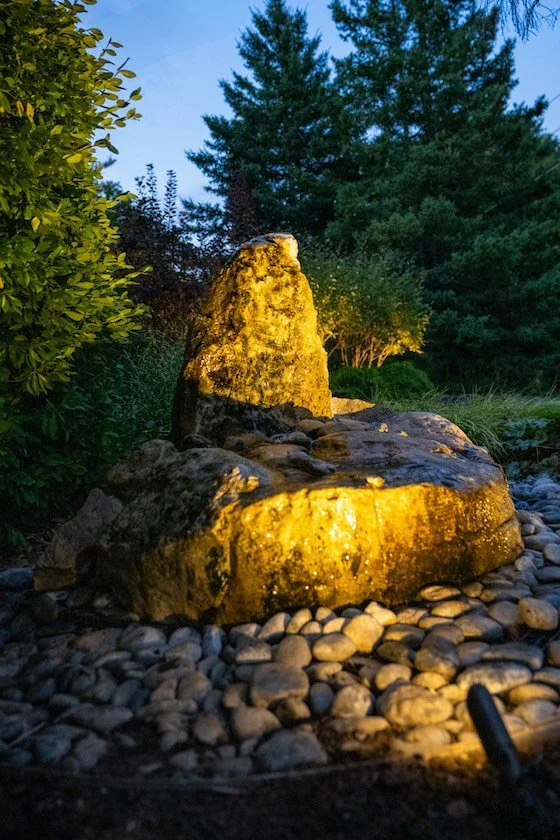
How each material ages
Five materials, five lifespans.
-
i.
Solid brass.
Dense, heavy and highly resistant to corrosion. It darkens to a brown patina that blends into planting, and the housing stays sealed. The most common choice for professional in-ground fixtures.
-
ii.
Copper.
Similar durability to brass and ages to a darker, sometimes green patina. Often used for path lights and decorative fixtures.
-
iii.
Cast aluminum.
Light and inexpensive, usually powder-coated. Once the coating chips, the metal underneath oxidizes; salt and fertilizer speed that up. Pitting lets water in.
-
iv.
Stainless steel.
Resistant to rust but can stain and pit in chloride-rich spots, such as near pools or salted walks, depending on the grade.
-
v.
Composite and plastic.
Cheap and corrosion-free, but UV and cold make many plastics brittle, and they do not hold their aim when knocked.
What fails first
It is rarely the light. It is the seal.
When a fixture fails in the ground, the failure usually runs in the same order:
-
i.
The housing lets water in.
Pitting, a cracked lens gasket or a failed coating lets moisture into the fixture body.
-
ii.
The socket corrodes.
Moisture attacks the socket and lamp contacts, so the light flickers or dies.
-
iii.
The wire wicks water.
Water travels along the lead into the connection under the mulch, where twist-on caps corrode.
-
iv.
The run goes dark.
One failed connection can drop several fixtures at once, which is why the joint matters as much as the fixture.
Fixtures questions
Answered plainly.
Are brass landscape lights worth the extra cost?
For a system you expect to last, usually yes. Aluminum housings tend to pit and let water in within about six years, faster near road salt or a pool, and once water is in the wiring fails next. Solid brass and copper weather instead of corroding through, so the housing stays sealed far longer.
Does brass landscape lighting turn green?
Brass usually darkens to a brown patina. Copper can develop a green patina over time. Both are surface changes that protect the metal underneath, and most homeowners prefer how they blend into planting.
Can I mix brass and aluminum fixtures?
You can, but the aluminum fixtures will usually fail first, and the two finishes age differently, so the system stops looking consistent. If you are replacing in phases, start with the fixtures in the wettest, saltiest spots.
What fixtures does SMART Outdoor Lighting install?
Solid brass and copper low-voltage LED fixtures at 3000K, shielded for dark-sky aiming, with gel-filled direct-burial connectors at every joint and a lifetime fixture warranty.
Keep reading
More guides.
Landscape lighting techniques · Choosing a colour temperature · How to choose a landscape lighting company
All guides PricingSee the difference
Hold the fixture before you buy it.
On the evening demo we bring the same brass fixtures we install and light your property with them, so you can see and handle them before anything is dug. Free, 45 minutes.
Book Free Evening Demo 888-444-1530