

Guides · Design
Landscape lighting techniques. What each one does, and where it works.
Good landscape lighting is a handful of techniques used in the right places. Here are the ten that matter, what they look like, and the mistakes that make a property look floodlit instead of designed.
The short answer
Light the things you want to see, not the ground between them.
A designed property uses three or four techniques, not one. Uplighting and moonlighting give trees depth, grazing brings out stone and texture, and low path and step lights make the approach safe. Everything else stays dark, and that contrast is what makes the lit parts look intentional.
The most common mistake is lighting evenly: a row of identical path lights, or one bright floodlight on the facade. Even light flattens a property. Layered, warm light at low output makes it look deeper and more inviting.
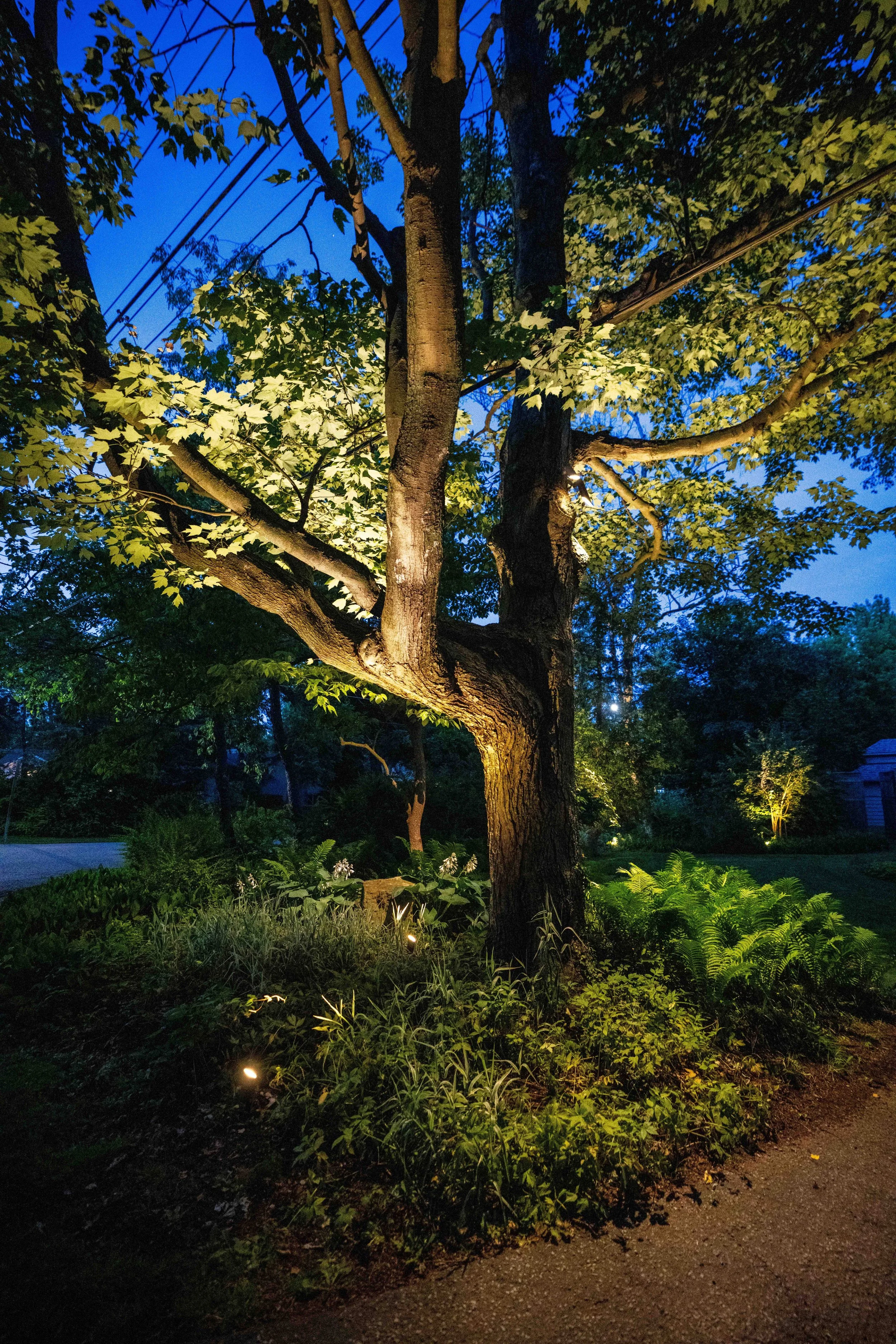
The techniques
Ten techniques, in plain English.
-
i.
Uplighting.
A fixture at ground level aimed up into a tree, column or wall. The workhorse of landscape lighting; two fixtures from different angles make a tree look three-dimensional.
-
ii.
Moonlighting.
Fixtures high in a mature tree aimed down through the branches, so dappled light and shadow fall on the lawn or patio below. The most natural-looking effect there is.
-
iii.
Downlighting.
Light from above, from eaves, pergolas or trees, aimed down onto a patio, steps or a garden bed. Useful light without glare.
-
iv.
Grazing.
A fixture set close to a wall and aimed up its face so light rakes across the surface and shows texture. Ideal for stone, brick and timber.
-
v.
Washing.
A wider, softer beam from further back that lights a flat wall or hedge evenly. Good for smooth surfaces; flattens textured ones.
-
vi.
Silhouetting.
Lighting the wall or hedge behind a feature so the feature reads as a dark shape against it. Works for sculptural plants and ornaments.
-
vii.
Shadowing.
A fixture in front of a plant aimed at a wall behind it, so the plant casts a large shadow. Dramatic and best used once.
-
viii.
Path lighting.
Low fixtures that throw light down onto a walk. Staggered and spaced apart rather than lined up like a runway.
-
ix.
Step lighting.
Small fixtures set into risers or walls so every tread is lit. The most important safety light on a property.
-
x.
Accent lighting.
A narrow beam on one focal point, such as a specimen tree, an urn or a water feature, to draw the eye.
Common mistakes
What makes lighting look cheap.
-
i.
Too bright.
High output washes out texture and spills onto neighbours. Most effects look best at a fraction of full output.
-
ii.
The runway.
Identical path lights evenly spaced on both sides of a walk. Stagger them and light the planting too.
-
iii.
Mixed colours.
Fixtures at different colour temperatures make a system look assembled from parts. Keep every fixture the same.
-
iv.
Visible glare.
Seeing the bulb instead of the effect. Shielded fixtures and careful aiming hide the source.
Design questions
Answered plainly.
What is the difference between uplighting and moonlighting?
Uplighting places a fixture on the ground aimed up into a tree or wall. Moonlighting places fixtures high in a tree aimed down, so light filters through the branches onto the ground below, like moonlight.
How far apart should path lights be?
Far enough that the pools of light just meet or leave small gaps, often around 2 to 3 metres depending on fixture height and output. Staggering them on alternate sides looks more natural than lining them up.
What is grazing in landscape lighting?
Grazing is placing a fixture close to a wall and aiming it up the surface, so light skims across the texture of stone, brick or timber. It shows texture that a floodlight from across the lawn would flatten.
How many lights does a house need?
A focused front-of-house design usually needs 10 to 20 fixtures, and a fully designed property 20 to 35. The number comes out of the design, not the other way around.
Keep reading
More guides.
Choosing a colour temperature · Brass vs aluminum landscape lights · How to choose a landscape lighting company
All guides PricingSee it on your home
Every technique, on your own property.
On the evening demo we light your trees, stone and walk temporarily so you can see which effects you like before anything is designed. Free, 45 minutes, no renders.
Book Free Evening Demo 888-444-1530